Case: Diastematomyelia
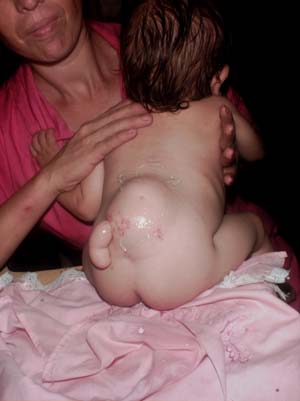

click to see the full ultrasound
Discussion: Diastematomyelia occurs when a midline septum divides the spinal cord longitudinally into two usually unequal portions extending up to 10 thoracolumbar segments. The septum is derived from mesoderm and it is composed of fibrous tissue, cartilage, or bone. The septum is usually anchored posteriorly on the dura or bony neural arch. The mesodermal septum commonly compromises the anterior horn cell column and subsequesntly causes muscle atrophy, decreased or absent deep tendon relfexes, and moderate to severe weakness of the distal muscles of the legs and feet. The involvement is usually bilateral. Deformities of the feet, particularly talipes equinovarus, can occur. Atonic bladder with urinary retention or incontinence may occur. Cutaneous lesions over the spine often accompany the condition. These include sacrococcygeal sinus, lipoma, hypertrichosis, soft-tissue swelling, meylomeningocele, and pigmented nevi or hemangiomas over the lower spine. The septum is usually located in the lower thoracic and lumbar areas but may be present as high as the second thoracic vertebra. Spina bifida occulta is often present, but is not a clinical significance. Kyphoscoliosis or scoliosis may accompany the other characteristic findings.
Management: Symptoms may often be prevented or significantly ameliorated by surgery. Excision of the mesodermal septum, including all portions attached to the anterior dural surface, and subsequent laminectomy are indicated. Failure to remove the septum almost always results in scoliosis.
Go to: Tropical Medicine Central Resource | Medical Central Resource